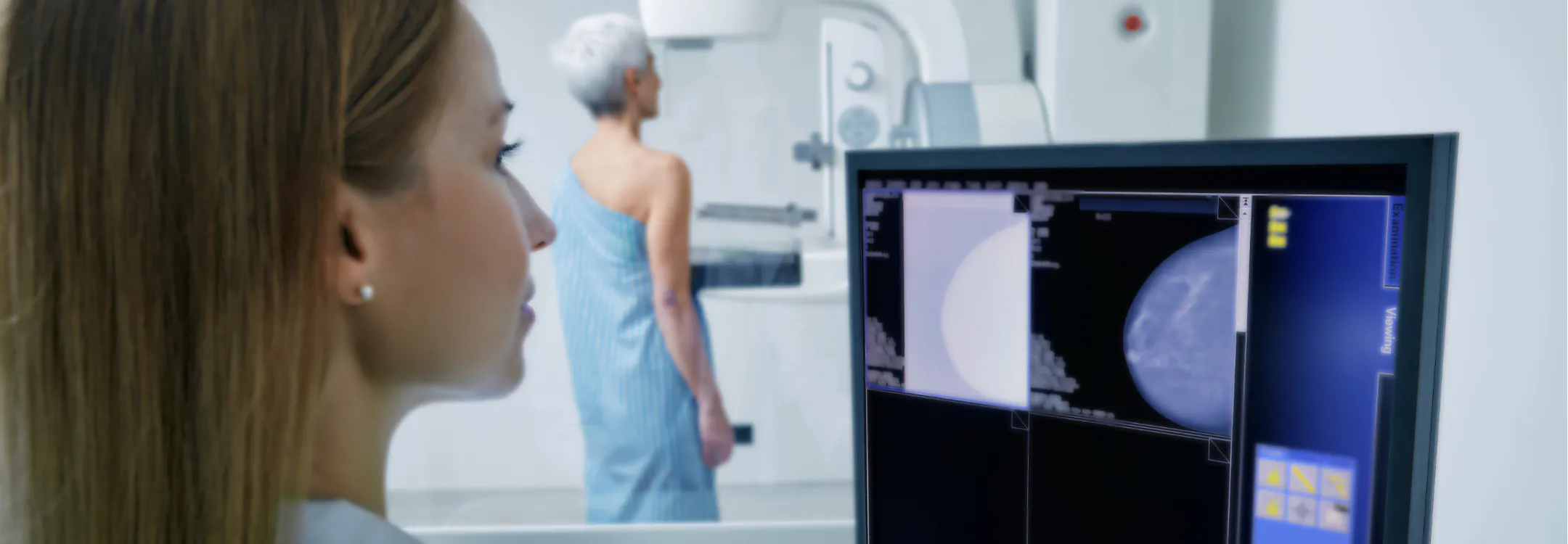
Screening and Diagnostic Mammography
A mammogram uses low-dose X-rays to create detailed images of the breast tissue. Depending on your specific health needs, your provider will recommend either a screening or a diagnostic exam.
- Screening Mammograms: These are routine yearly exams for women who have no symptoms or visible breast changes. The goal is to establish a baseline and detect any abnormalities as early as possible when they are most treatable.
- Diagnostic Mammograms: If a screening mammogram shows a suspicious area, or if you are experiencing symptoms like a lump or nipple discharge, a diagnostic mammogram is used to get a more detailed and focused look at the area of concern.
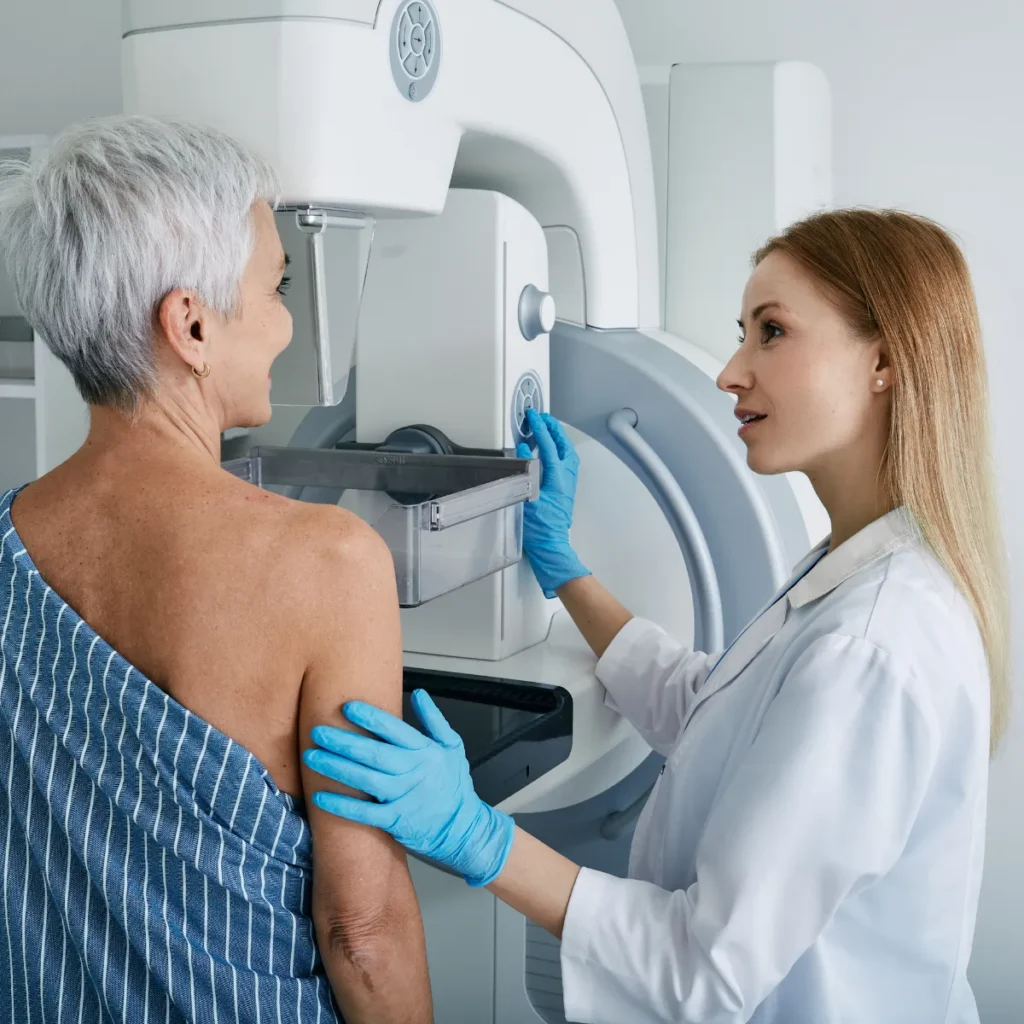
- The Procedure: During the exam, a technician positions your breast on a platform. A clear plastic plate is used to compress the breast for a few seconds to ensure a clear image. This process is repeated for both breasts.
- Advanced Digital Technology: We utilize digital mammography, which provides clearer images than traditional film, requires less radiation, and allows for better evaluation of dense breast tissue.
Guidelines for Your Appointment
To ensure the highest quality images and a comfortable experience, please follow these preparation steps:
Scheduling Your Visit:
- Try to schedule your mammogram for the week after your menstrual period, when your breasts are less likely to be tender or swollen.
On the Day of the Exam:
- Do not apply deodorant, talcum powder, lotions, or ointments under your arms or on your breasts. These substances can appear as white spots on the X-ray and may interfere with an accurate reading.
Clothing and Comfort:
- We recommend wearing a two-piece outfit (a top and a skirt or pants), as you will only need to remove your clothing from the waist up for the procedure.
Comprehensive Care for the Concerns That Matter Most
Our providers offer a full range of gynecologic services — from routine preventive care to evaluation and treatment of specific health concerns. Click any item below to learn more.
- Annual or “well-woman” exams
- Adolescent gynecology
- Breast exams & breast pain
- Pap smears
- Colposcopy
- Contraception (hormonal and non-hormonal)
- IUD consultations, insertion, removal & management (Mirena, Paragard, Nexplanon)
- HPV vaccination (Gardasil)
- Management of abnormal Pap tests
- STD testing, information, and treatment

When to Begin Regular Screenings
Current guidelines from organizations like the American Cancer Society and the American College of Obstetricians and Gynecologists recommend a proactive approach to breast health:
- Age 40 and Older: Most women should begin annual screening mammograms at age 40.
- Higher Risk Patients: If you have a family history of breast cancer or other risk factors, your provider may recommend starting screenings at an earlier age.
- Breast Awareness: Regardless of your age, it is important to be familiar with how your breasts normally look and feel. If you notice any new lumps, skin changes, or discharge, contact our office immediately for an evaluation.
Frequently Asked Questions
Meet the Providers Who Care for You
Our entire OB/GYN team is here for your gynecologic care, at every location.



What Patients Are Saying